
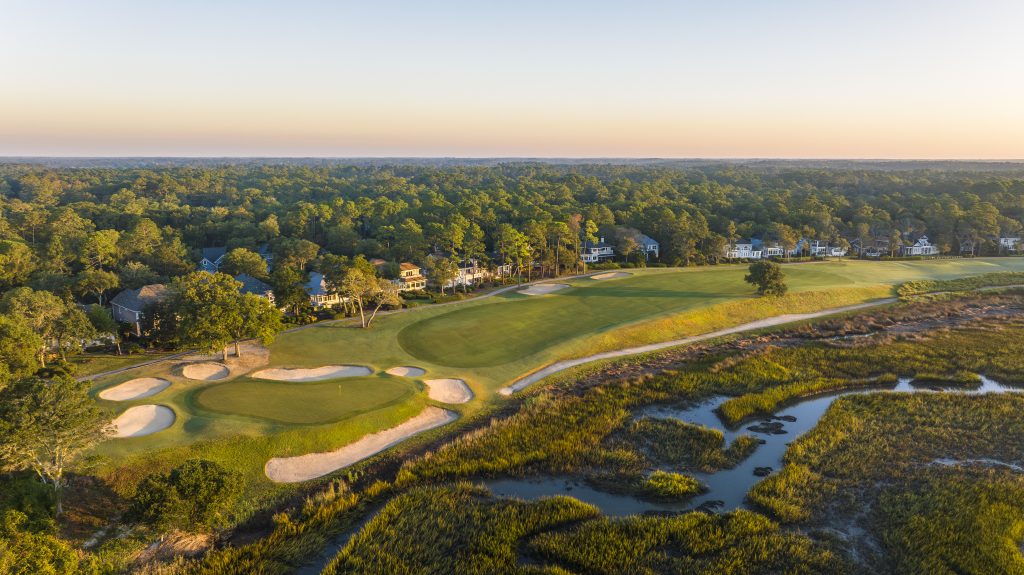
When golfers prepare for a round, they often focus on the layout, scenery, and conditions of the course, but there’s more beneath the surface. Two numbers—course rating and slope rating—are critical to understanding the challenge each course presents. These ratings help gauge the level of difficulty and give golfers a better sense of how to approach the course strategically.
In this blog, we’ll break down the meanings of course rating and slope rating, how they’re calculated, and how they influence your golf experience. To illustrate these concepts, we’ll use our very own, one of the East Coast’s premier coastal courses, Tidewater Golf Club, as an example.
What is Course Rating?
The course rating is a number that represents the score a scratch golfer (a golfer with a handicap of zero) would be expected to achieve on a specific course under normal playing conditions. At Tidewater Golf Club, the course rating reflects how challenging the course is for the best golfers.
For example, the championship tees at Tidewater have a course rating of 73.9, indicating that a scratch golfer is expected to shoot 73.9 strokes under typical conditions. This number reflects a course that is more challenging than par (which is 72), due to factors like yardage, hazards, and terrain.
Course rating helps golfers understand the difficulty of a course relative to others. Tidewater’s 73.9 rating is slightly higher than par, suggesting that even scratch golfers will face a significant test on this beautiful, yet demanding, course.
Factors That Influence Tidewater’s Course Rating
At Tidewater Golf Club, several elements contribute to the course rating:
- Yardage: The total yardage from the championship tees is 7,150 yards. Longer yardage means more challenging approach shots, particularly when paired with tight fairways or elevated greens.
- Hazards: Tidewater’s marshlands, water hazards, and bunkers create constant challenges. The scenic beauty of the course—bordered by the Atlantic Intracoastal Waterway—comes with obstacles that demand accuracy.
- Wind Conditions: Tidewater’s coastal location means golfers frequently contend with strong winds, particularly on holes like the 17th, known as “Wicked Wind.” This adds another layer of difficulty that can significantly impact shot accuracy and distance.
- Green Complexes: The large, undulating greens require precise putting and strong short-game skills. For scratch golfers, the challenge isn’t just reaching the green but navigating the breaks and speeds once there.
What is Slope Rating?
While the course rating applies to scratch golfers, the slope rating measures how difficult a course will be for an average golfer (often called a bogey golfer). A bogey golfer typically plays at a 20-handicap for men and a 24-handicap for women. The slope rating reflects how much more difficult the course is for these players compared to scratch golfers.
At Tidewater, the slope rating ranges from 119 to 148, depending on which tees are used. The slope rating’s wide range tells us that Tidewater can be fairly challenging for less experienced golfers, especially from the back tees. The higher the slope rating, the more difficult the course is for average golfers.
The average slope rating for most courses is 113. With Tidewater’s slope ranging up to 148, it shows that the course is notably tougher for mid-to-high handicap players, especially if they are not playing from the most appropriate tees.
Factors That Influence Tidewater’s Slope Rating
Tidewater’s slope rating is affected by factors that can particularly challenge average golfers:
- Hazard Placement: Tidewater’s numerous water hazards and marshes require well-placed shots, making the course intimidating for those who struggle with accuracy. Forced carries over marshlands can trip up less experienced golfers.
- Narrow Fairways: Tidewater features tight landing areas on several holes, demanding precision off the tee. Bogey golfers who tend to miss fairways will find it difficult to recover from tough lies in the rough or bunkers.
- Wind Impact: The wind, particularly on exposed holes, adds complexity for golfers of all skill levels but is especially punishing for those who lack control over their shots.
How Course Rating and Slope Affect Your Game at Tidewater
Understanding Tidewater’s course and slope ratings can help you better prepare for your round and tailor your approach based on your skill level. Whether you’re a seasoned golfer or just starting out, these ratings provide useful insights for planning your strategy.
- Choosing the Right Tees: Tidewater offers several sets of tees with different ratings. For example, the forward tees at Tidewater have a lower course rating and slope, making the course more manageable for higher-handicap players. Selecting the right tees is crucial for an enjoyable round. If you’re playing from the back tees (championship tees), be prepared for a more challenging experience with a course rating of 73.9 and a slope rating of up to 148. For many golfers, moving up a tee set can provide a more forgiving experience.
- Handicap Adjustments: Your golf handicap is calculated using the course rating and slope rating. On tougher courses like Tidewater, you’ll receive more strokes, reflecting the added difficulty of the round. If you normally play courses with an average slope rating (around 113), expect your handicap to adjust upwards when playing a higher-slope course like Tidewater.
- Strategic Course Management: Understanding the ratings can help you approach the round more strategically. For instance, on holes with high difficulty (such as Tidewater’s par-3 3rd and par-4 4th), it may be smarter to play more conservatively, avoiding aggressive shots that could result in penalty strokes or tough recovery situations.
- Mental Preparation: Knowing that you’re about to play a course with high slope and course ratings should help you manage expectations and approach the round with a mindset focused on minimizing errors rather than going for low scores. Tidewater, with its beautiful but challenging terrain, is a course that demands patience and strategy.
Tips for Playing High Slope Courses Like Tidewater
For courses with a high slope rating, like Tidewater Golf Club, you can improve your score and overall experience by following a few key strategies:
- Focus on Accuracy: Tidewater’s tight fairways and well-placed hazards demand accuracy off the tee. It’s better to hit a controlled shot that keeps you in play rather than trying to maximize distance and risk landing in trouble.
- Prioritize Short Game: Tidewater’s fast, undulating greens make putting and chipping essential skills. Work on your short game before your round, as it will help you save strokes when you miss the green.
- Respect the Wind: Wind plays a major role at Tidewater. Factor it into your club selection, especially on holes like the 17th (Wicked Wind), where conditions can quickly turn against you.
Conclusion
Understanding the course rating and slope rating at Tidewater Golf Club provides invaluable insight into how challenging the course will be for golfers of different skill levels. The course rating of 73.9 and slope rating ranging from 119 to 148 reflect the tough, but rewarding, experience Tidewater offers to golfers. By considering these numbers, you can better plan your strategy, choose the right tees, and fully appreciate one of the most beautiful and demanding courses on the East Coast.
Whether you’re a scratch golfer or an average player, paying attention to Tidewater’s ratings can help you get the most out of your round while respecting the course’s unique challenges.